Water Contaminants
What's in your water—and why it matters. Explore the sources, potential concerns and testing considerations behind common drinking-water contaminants.
Water quality & health
Contaminants & the body
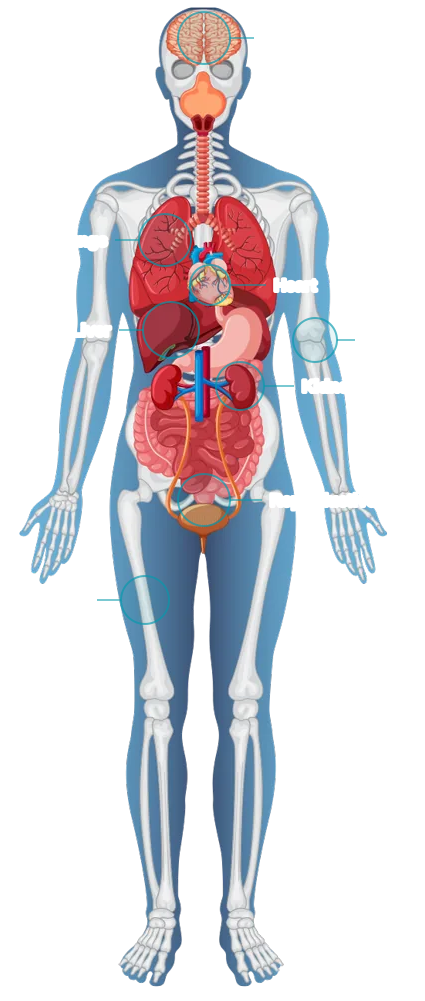
The AquaOx body diagram highlights organs and body systems discussed in its contaminants library, including the brain, lungs, heart, liver, kidneys, reproductive system, skin and bones.
Potential health effects depend on the substance, concentration, exposure and individual circumstances. This illustration does not establish what's in your water or indicate that any particular system removes these contaminants.
Know what's in your water
Water contaminants.
Clear answers.
Explore common water-quality concerns, where they come from and what to consider before choosing treatment. Their presence varies by water source and home.
12 water-quality concerns
Persistent chemicals used in some industrial processes and consumer products.
Can enter water through corrosion of service lines, solder and plumbing fixtures.
A naturally occurring element that can be found in groundwater.
Disinfectants used by utilities to protect water from harmful microorganisms.
Can form when disinfectants react with material naturally present in source water.
May enter water from fertilizer, septic systems and agricultural runoff.
Agricultural and landscape chemicals can reach surface water or groundwater.
Volatile organic compounds may enter water from fuel or industrial contamination.
Microbial contamination can affect wells or water supplies after a disruption.
Naturally occurring minerals that may cause staining or discoloration.
A gas that can cause a rotten-egg odor in water.
Suspended particles can make water cloudy and affect treatment equipment.
Not every system removes every contaminant. Reduction depends on the specific model, certifications, water conditions and maintenance. Our complimentary basic water analysis is not a comprehensive contaminant or safety test; some concerns require a certified laboratory.
Start with answers about your water.
Talk to our team about your water source, your concerns and whether a basic water analysis or targeted laboratory testing is appropriate.