Explore all of our water treatment education in one place. Each section below covers a key topic homeowners ask about most, from contamination and UV disinfection to filtration, reverse osmosis, water hardness, standards, and the chemistry that affects system performance.
Ultraviolet Disinfection 101
UV disinfection is a physical treatment process that inactivates microorganisms without adding chemicals to the water. It works best when the water is properly pretreated and the system is sized for the real flow, water quality, and UV transmittance.
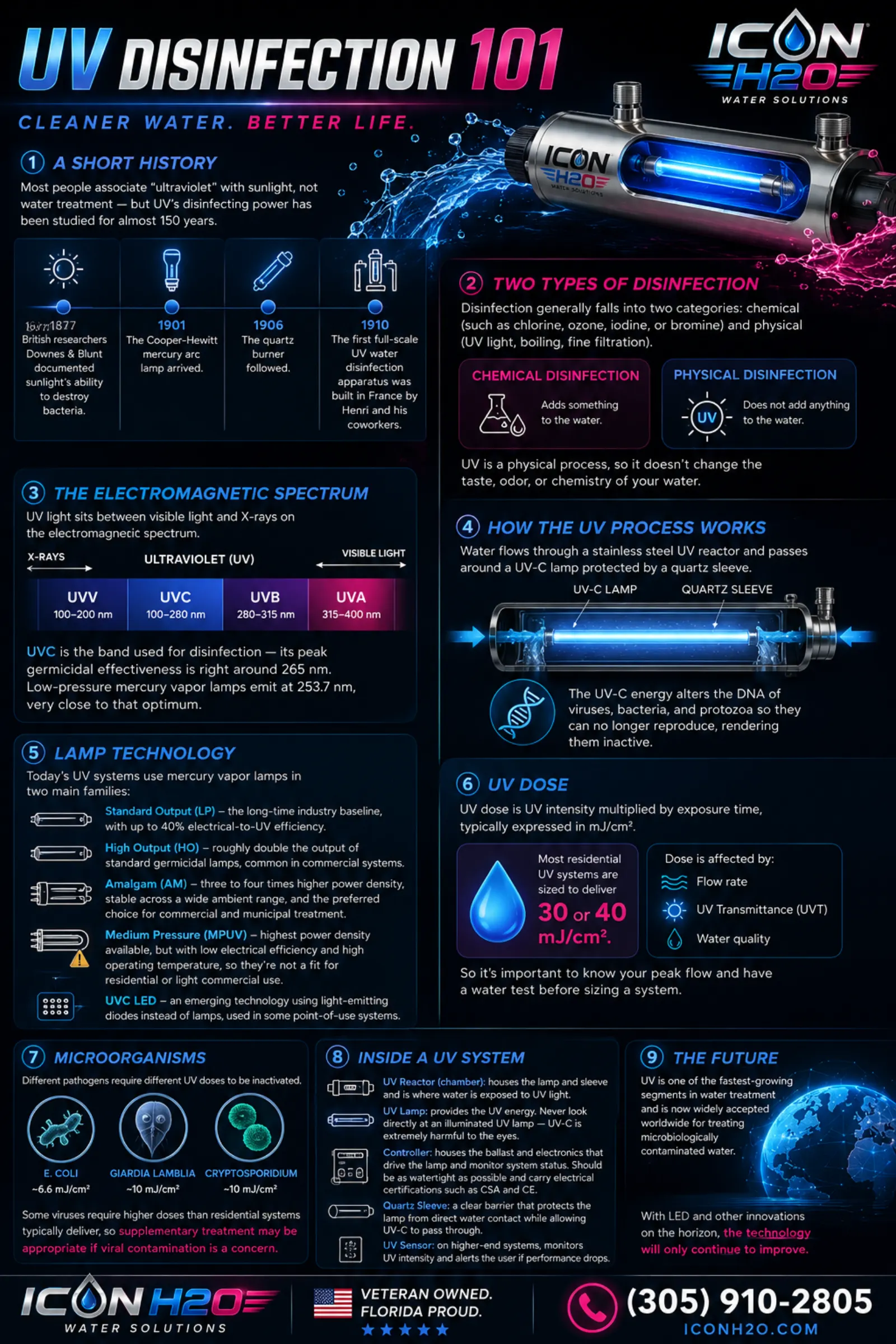
Why Choose UV?
UV treatment is popular because it is chemical-free, compact, and effective against a broad range of microbes when the incoming water is properly conditioned. It does not change the taste or odor of the water and fits both point-of-use and point-of-entry applications.
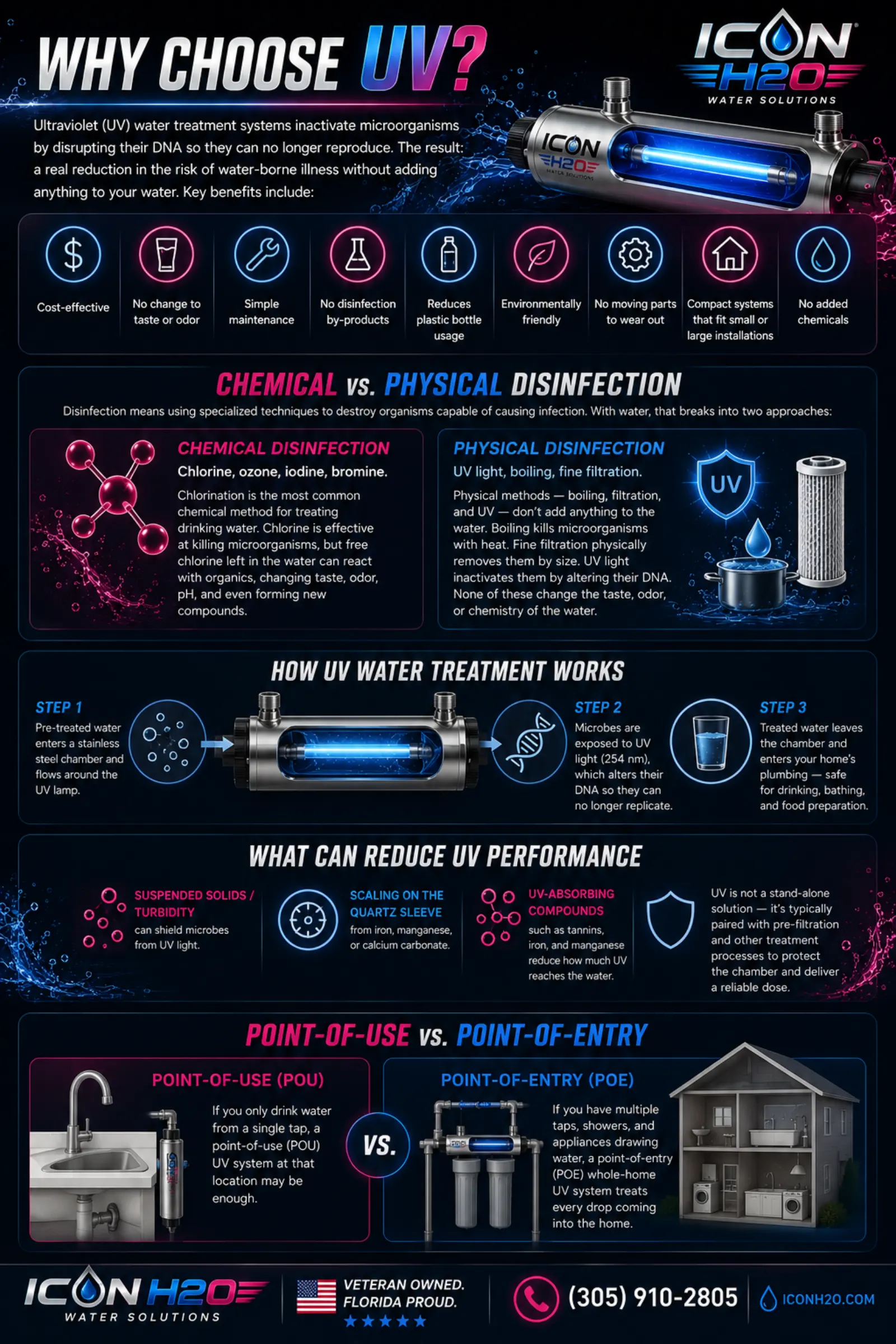
What's In MyH2O?
Water can look clear and still contain contaminants. Microbiological contamination, sediment, hard water minerals, metals, PFAS, pesticides, pharmaceuticals, and other dissolved substances all affect water quality differently.
Proper testing is the first step before recommending treatment to ensure safety for your household.
UV Regulations
Residential
Residential UV applications cover a wide range of flow rates and system sizes. In many regions, UV equipment must be independently tested and certified to recognized standards such as NSF/ANSI 55, WQA Gold Seal, and CSA B483.1.
Commercial / Industrial
Commercial and industrial systems are often used in campgrounds, hotels, restaurants, processing plants, and recreational facilities. These applications may follow standards such as NSF/ANSI 55, ETV, and DVGW depending on the installation and use case.
Municipal
Municipal UV systems always fall under drinking water regulations because they serve the public. Common testing references include the USEPA UVDGM, DVGW, ÖNorm, and NSF/ANSI 55.
NSF/ANSI 55
- Class A systems are intended for disinfection of non-potable water to a potable level and must deliver at least 40 mJ/cm² at the alarm set point.
- Class B systems are intended for supplemental treatment of already potable water and must deliver at least 16 mJ/cm² at the alarm set point.
Filtration 101
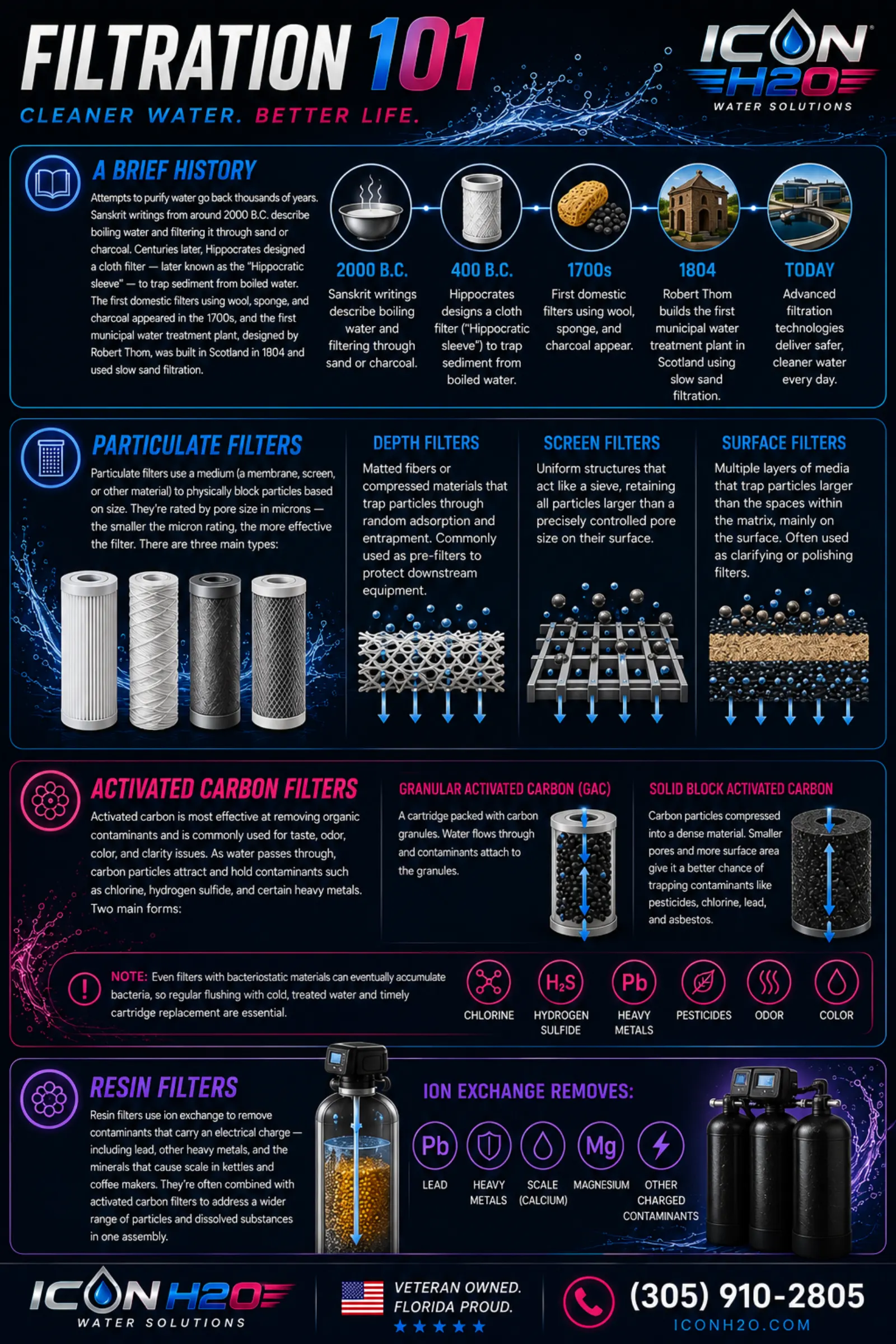
Filtration covers everything from sediment control to activated carbon and resin-based treatment. The right filter media depends on the contaminant, the desired flow rate, and where the system sits in the overall treatment train.
Reverse Osmosis Systems
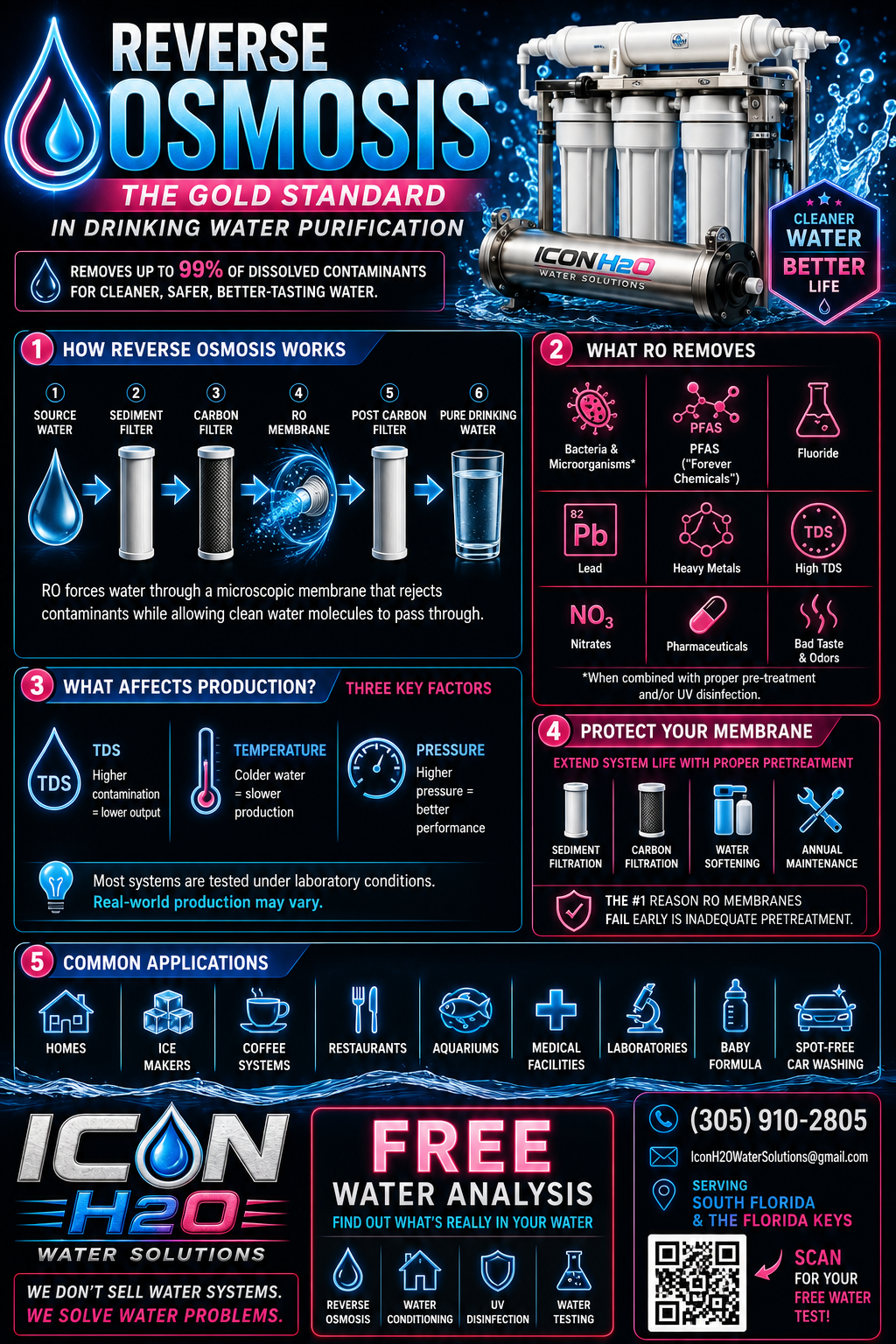
Reverse osmosis, or RO, is one of the most thorough methods for producing high-purity drinking water. It uses pressure to force water through a semipermeable membrane that rejects dissolved contaminants while allowing water molecules to pass through.
Real-world output depends heavily on three variables: TDS, temperature, and incoming pressure. Proper pretreatment is also critical because suspended solids, iron, manganese, silica, organic matter, and oxidants can foul the membrane and shorten system life.
Water Hardness
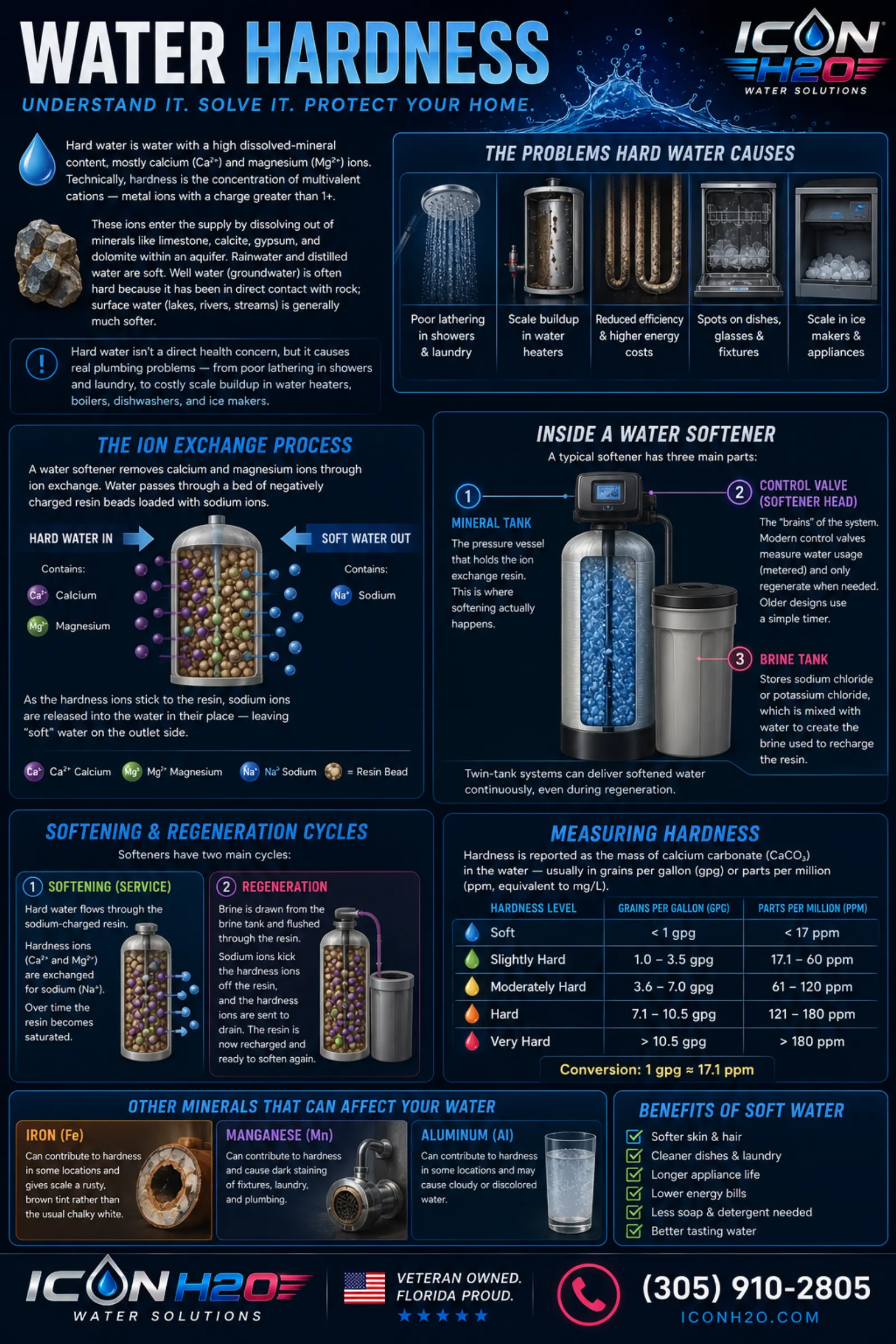
Hard water contains elevated dissolved minerals, primarily calcium and magnesium. While it is not usually a direct health concern, it causes scale buildup on fixtures, water heaters, dishwashers, ice makers, and plumbing — which leads to cleaning issues, reduced efficiency, and shorter equipment life.
Chemistry of Water
Good treatment design starts with understanding the chemistry of the water entering the system. Several factors directly affect treatment performance and long-term equipment reliability.
pH
pH measures how acidic or basic the water is on a scale of 0 to 14. Most drinking water falls near 7 to 8. Very low pH can be corrosive and may damage equipment, including UV reactor components.
Hardness
Hardness comes from dissolved calcium and magnesium. When heated, these minerals can fall out of solution and create scale, including on UV quartz sleeves, reducing system effectiveness.
Iron & Manganese
Iron and manganese can oxidize and stain equipment surfaces. They also interfere with UV transmission and should often be removed before UV treatment.
Dissolved Gases
Gases such as hydrogen sulfide can create odor issues and may interfere with sensors or stain plumbing fixtures and system components.
Turbidity
Suspended particles can shield microorganisms from UV light and reduce the effectiveness of both chemical and physical disinfection. A properly sized sediment prefilter is often essential.
Tannins
Tannins are organic compounds that can give water a yellow or tea-like color. They also absorb UV light and may require dedicated pretreatment.
UV Transmittance (UVT)
UVT measures how effectively water transmits UV light. Lower UVT reduces delivered dose, which means either lower flow or more robust equipment may be needed to maintain proper performance.